14 February 2014

Kingston University: POP Project continued

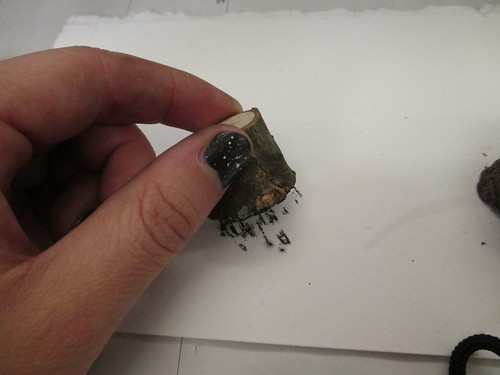
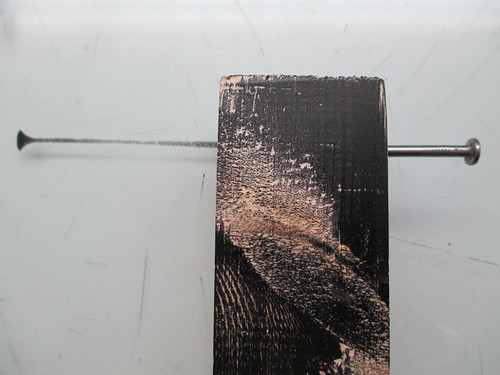
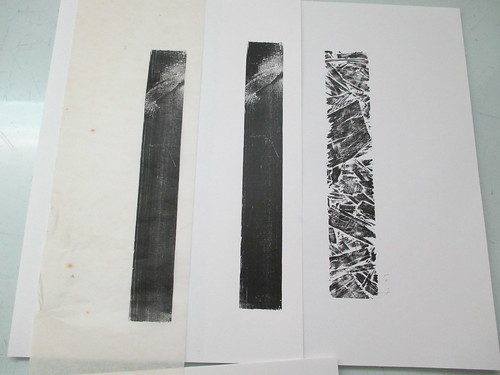
Our house has a small forest worth of wood in at the moment from mine and Ani's escapade, so I decided to take a few prints for research.


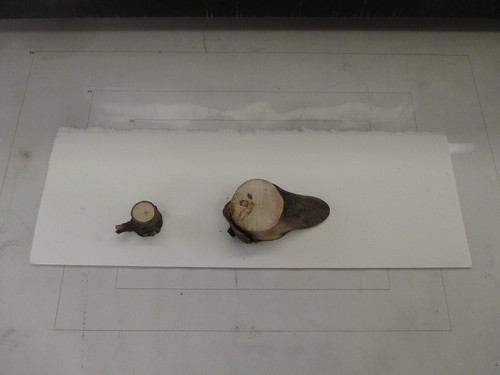
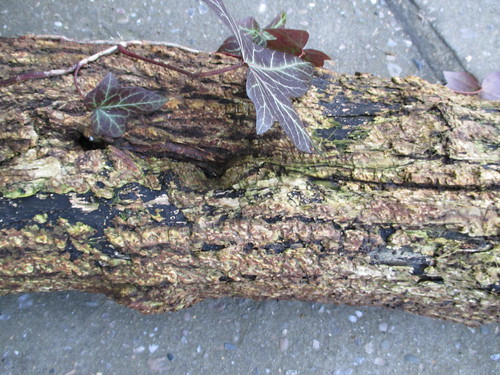
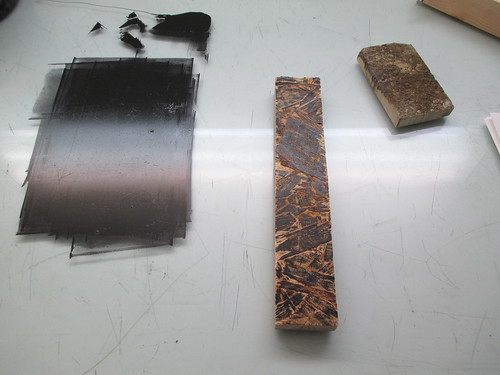
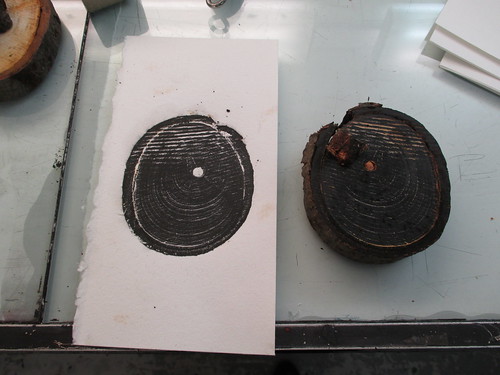
I decided I needed a whole succession of log cross-sections to myself. I went and spoke to Will, a technician in the workshop who specialises in finding greenwood for the Uni. These two pieces were just sitting by the river at the uni, and then it was up to me to clean them up! 


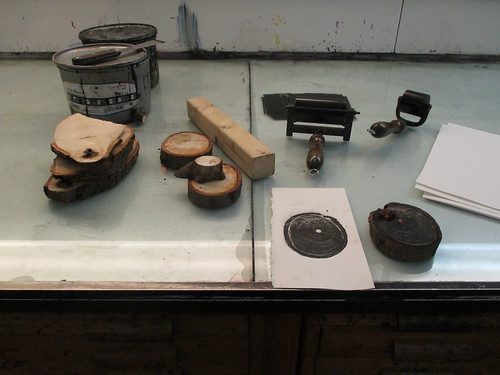
The bark was very soft, and the wood is too; it makes terrible furniture, but might just work for me. Will helped me cut the first piece into about 60 one inch pieces. I numbered them in order so hopefully it will set me up for some great experiments in the print room next week!

Kingston University: Experimental Life Drawing, Hannah

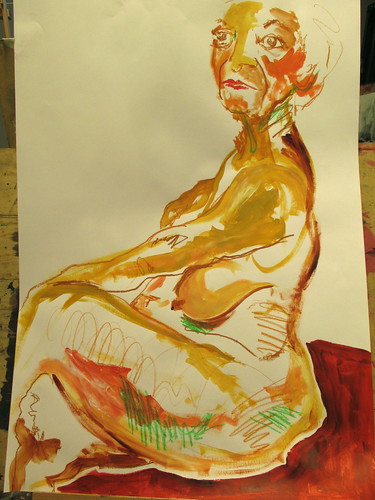
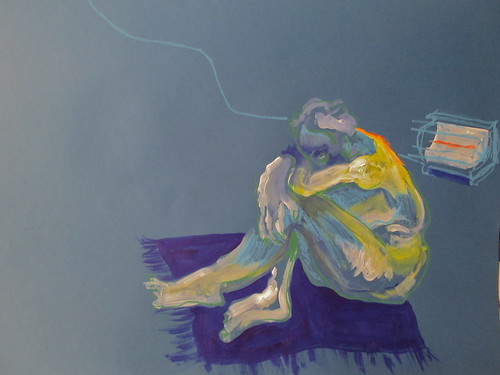
This week Jake was away so we had another tutor call Martin with the beloved Hannah, who we'd worked with last term. We started out doing our own thing because he wanted to see what our work was like. I brought acrylic paints again, and this time I had oil pastels with me as well. This was my first painting.


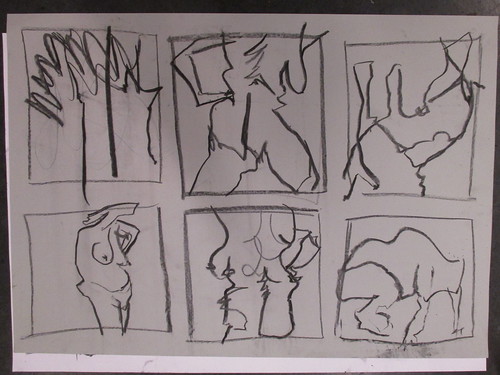
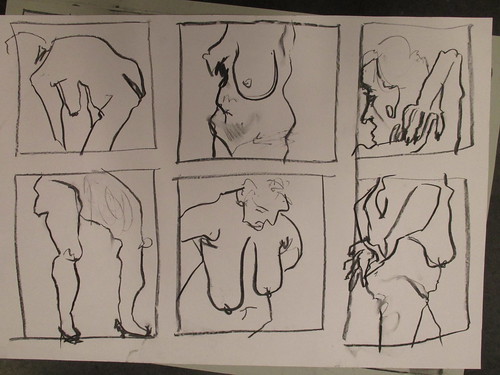
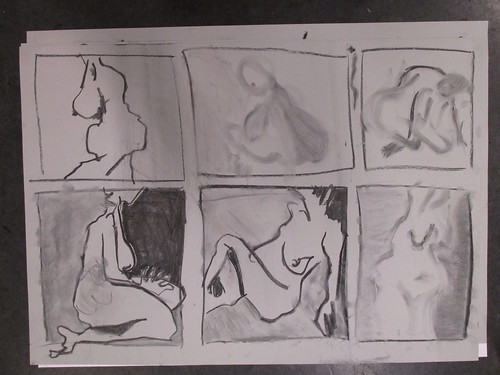
After having a look, we went through some exercises with Martin. It was interesting to have quite an academic take on the 'experimental' and he really encouraged us to be instinctive and relaxed. It really reminded me of the life drawing classes we had on Foundation.


After working on these exercises, the last hour went back to our own materials. 


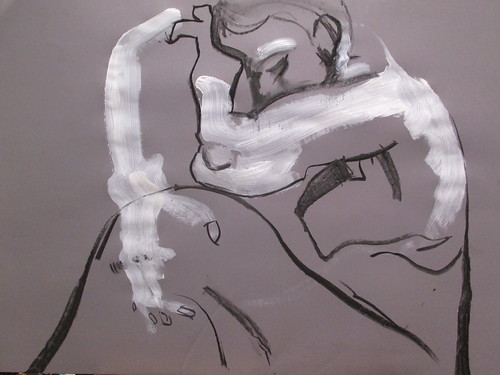
I was really pleased with these last two paintings, and I'm really glad that we had those exercises in between. It really loosened me up back to the kinds of drawings I like to do and love to look at.

13 February 2014

Front Row Society Submission: Artisanal Botanist


Some exciting news! I spoke to my beautiful friend Katie over Christmas (she does Surface Pattern at Leeds), and she told me about Front Row Society, who run competitions on a monthly basis specialising in fabric prints. For me, it's just a great encouragement to do something for myself every month, and hopefully it will pay off! So here's my Venus Fly Trap design, based around the given theme, Artisanal Botanist. It sticks out like a sore thumb amongst all these flowery mirror-y digital prints but, I hope that's what will give me a chance of being noticed! I may also do a couple more submissions last minute tomorrow with the same illustrations... GAH so exciting!

The prints are chosen on basis of merit, but each print is voted on by anybody, which increases the chance of it being seen! So I would really really appreciate it if you could vote for me! And of course, any other prints that you think deserve chances of winning.

Votes are made HERE and starts on the 16th February until the 28th!

Thankyou!! It would mean the world to me if you voted for me, it is my first go but one of my resolutions was to get stuck into some competitions this year while I have the chance! So I will be doing these every month, or at least every competition that I think has some steam for me.


Kingston University: Experimental Life Drawing, Brian

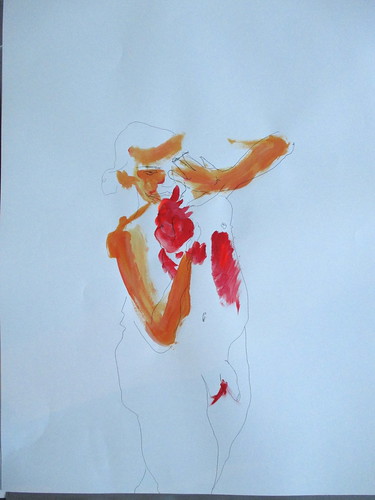
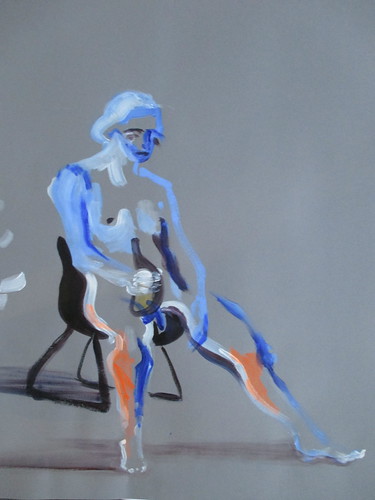
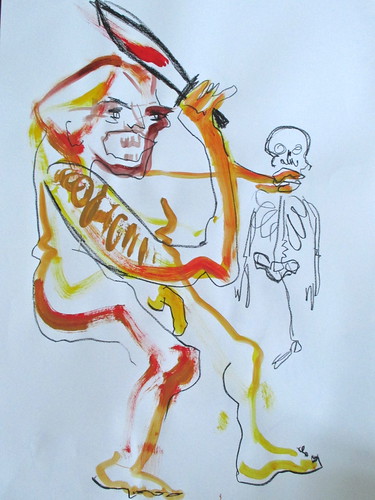
This is Brian, our very enigmatic life model. I decided to do some painting this week, because I hadn't held a brush in so long that I fancied a challenge. It paid off I think! I particularly like the first one, but I think I'll add some more to them when I put them in my portfolio. This is the first time I've properly really gone into character, and I much prefer using life drawings as a means of getting that across. I'm not so good at human characters from my head, or any human-like figure really, so it feels like a step in the right direction.


Martin Creed, 'What is the Point of It?'


An exhibition review for my research portfolio. Enjoy!

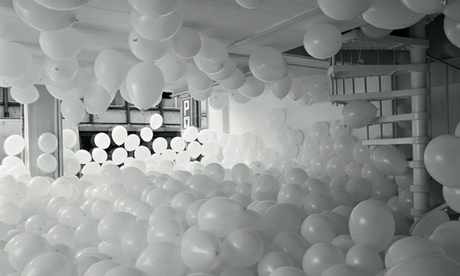
Martin Creed seems to have a very systematic way of displaying his work. Despite the chaos of colours, sounds and movements, the pieces are placed in number order. Fifty percent of works you could pass by without noticing, but the rest catch you by surprise; objects move and react, making them seem like characters in themselves. A pretentious white grand piano suddenly springing alive and banging all its hinges can’t help but make you jump and laugh at yourself. The introduction describes the exhibition as ‘ [reflecting] the unease we face in making choices, the comfort we find in repetition, the desire to control, and the inevitable losses of control that shapes existence.’  I found that as you notice the order, you start to notice the disorder, even the slight tilt of one frame next to another, or the edge of a piece matching the edge of the wall. The tension comes from all angles, whether that be from annoyance that everything is supposedly just fun, (or maybe it isn’t) or from the fact you can’t touch anything that’s wonky. That does mean that you can laugh at yourself for a bit though. The balloon room, Work No 268, is a good example, filling you with thrill, and yet also coming close to claustrophobia at the same time. Waiting for the poor woman to finish her shit in the concluding video of the exhibition, and yet you still stay and watch to see if it offers more. It’s that childlike feeling that you get from these moments that is the point for me. The story doesn’t come from the pieces of art; it comes instead from the reactions of the viewer. It puts every single person into perspective. No person is more educated than the other, and all will feel the same feeling that is a little bit of joy. In words, it would be infuriating I’m sure that turning lights on and off can win a Turner Prize no less, but once you’re in that situation, what do you feel? A childlike curiosity, fear, sickening obsession, and joy. I highly recommend this exhibition, despite what some reviews are saying. Maybe they are just not letting themselves have enough fun. They’re looking for something within the exhibition that they will never find. What is the point? For everybody loosen the fuck up.


And here's Hannah and Ani being cute and having fun.

05 February 2014

Kingston University: Talking Heads: Sarah Dyer


This week we had Sarah Dyer come in to talk to us about children's book commissions and advertising. She graduated from Kingston in 2001 and actually had published a book in her second year at University. The difference between publishing jobs and editorial is mostly the relationship with the client; publishing requires quite a lengthy relationship and the process is quite long which Sarah says she quite prefers. So far she has published 7 books all over the world in many different languages. She tends to only work with one or two publishers at the same time, because otherwise she would end up competing with herself. Her first book was published with Bloomsbury Books, importantly pre-Harry Potter at this stage. The relationship and types of story they were looking for changed after Harry Potter, and was also affected by the recession; many publishers wanted to play safe. Her book was seen through arrangements at Kingston. She tends to use her sketchbooks and dummy books as her 'portfolio' which is unusual but quite canny, as it is more inviting for the client. They want to be as much part of it as you do. Publishers are also looking for characters with potential for series, and sustenance on all sides and points of view.

'Batty' the book shown above, was rejected by Bloomsbury and published by Francis Lincoln. These two are her two main publishers. Sarah advised us to 'pick our battles wisely' because at the end of the day, marketing and sales are your allies. They need to sell this book as much as you do! You generally are met with two people: the Editor and the Art Director. The Editor helps you with your text and storyline, whereas the Art Director helps you work out layouts, and agrees on how the imagery works. For example, parts of Batty are printed upside down to show his point of view, and the art director helps decided on continuity which pieces of text or image are placed upside down.

When you pitch, you take sketchbooks with developments and dummy books. These dummy books might be edited again and again until a final is agreed upon. A standard book is 32 pages, which included the front and back cover. Boulogne book fair is THE book fair for children's books, and is the gateway for your book being coeditioned in other languages. The fee that publishers pay you is the right to PUBLISH not to own. Your work remains yours.

Sarah has just taken up a new project in Advertising though, making artwork for animations for Cushelle. It is a totally different way of working, and is an extremely fast turnaround in comparison. You are a small, but important, cog in a much bigger system, so you don't get to make so many decisions. She also has to use their colour ways. However, somehow they become animations from all the pieces she sends! This project lasts for a year, an episode every month.

Her advice for us on children's books is read your stories out loud. You'll never really see it as a whole until you do, so it's worth reading it to someone and hearing yourself helps to take yourself out of your illustrator head. Seeing it from afar can help you make the right adjustments to make it flow. And also, make sure you give your creations worth; it has to be important to you and protect your story!
Kingston University: POP Project and In the Making Exhibition

This term is probably the most exciting for me, mainly because we get to do a lot of making. Our big project this term is the POP Project, Print and Object Project. Obviously I was screaming inside, because print and object are possibly my most favourite things in the world. Its mainly process (YAY) so it's not necessarily that I have to come up with a concept straight away.

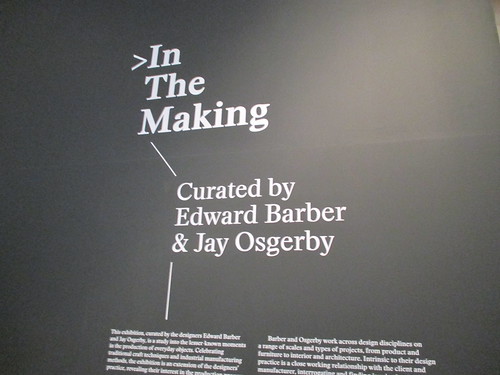
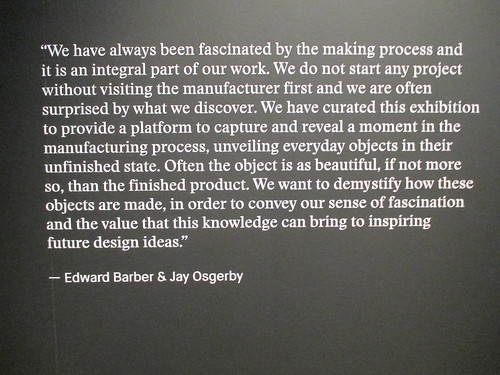
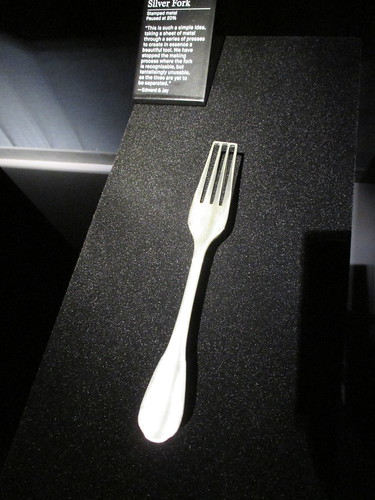
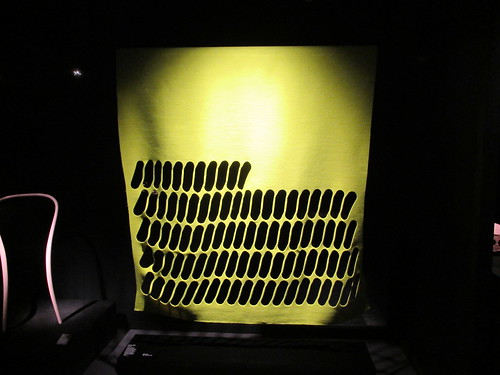
We were advised to go and see the new exhibition at the Design Museum called In the Making. It's really worth going, and the whole museum has great exhibitions on at the moment (PAUL SMITH!). Despite the kind of annoying spot lighting, I thought the exhibition was curated really well and I liked the objects they had decided to show. Very normal, sometimes mundane objects were shown, and yet the objects became something else!


I actually would quite like a piece of tennis ball felt for myself actually.

For this project I really wanted to use wood. After visiting Jonas' family in Germany, with an enormous collection of woodcut prints in their library no less, I've become a little bit obsessed. 

So far my research has just been in collecting, although I plan to do some more. This is definitely something I want to pursue long term, so it's been pretty great so far getting to do this for a whole project that is 8 weeks long!


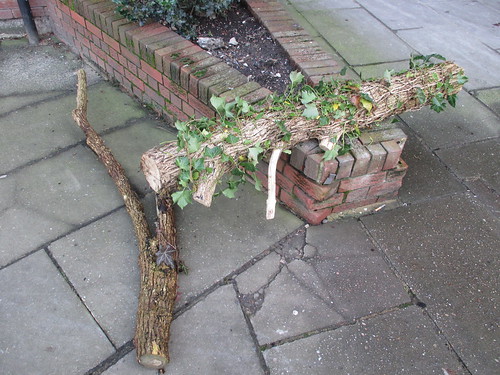
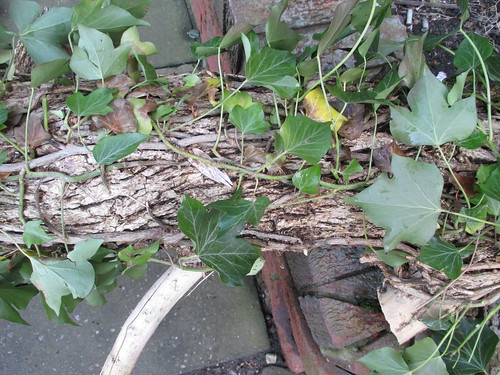
Since then, Ani and I have been hacking at fallen trees, collecting twigs, mostly in torrential February rain. But I'm hoping to get some more printing done soon! I'll be sure to keep you all posted.